Hardy Forest Ferns for Deep Organic Humus
Ferns are living relics of prehistoric understory systems that antedate flowering plants by hundreds of millions of years. In the residential woodland garden, their unique vascular adaptations allow them to thrive where flowering ornamentals succumb to insufficient light. By deploying their subterranean rhizome networks, ferns lock loose slope loam into permanent cohesion while cycling humidity back into the canopy.
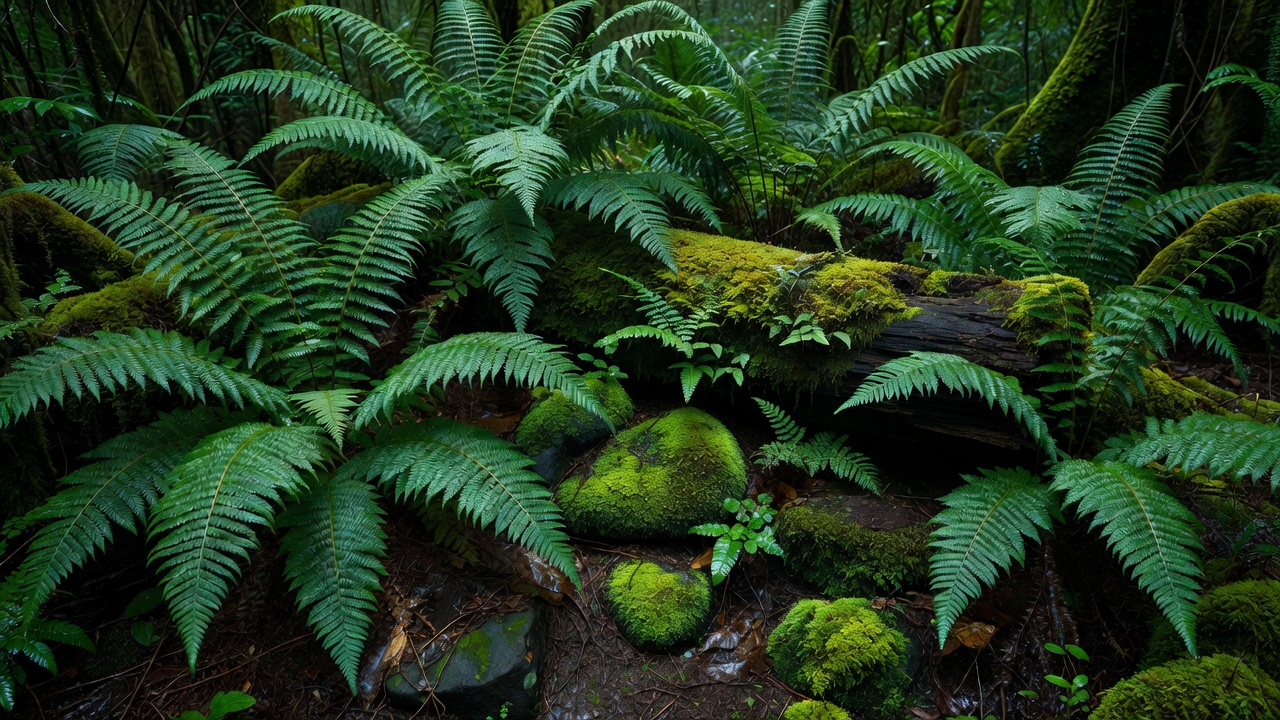
Benchmark Woodland Fern Taxa
1. Northern Maidenhair Fern (Adiantum pedatum)
Distinguished by jet-black polished stipes and finger-like, curved horizontal pinnae, Adiantum pedatum epitomizes woodland elegance. It demands sheltered coves shielded from afternoon gusts. Its delicate fronds channel ambient fog directly into its fibrous crown, thriving in alkaline-to-neutral limestone loams.
2. Marginal Wood Fern (Dryopteris marginalis)
An evergreen stalwart for rocky outcroppings and sloping banks. Forming rigid, leathery vase-like crowns, Dryopteris marginalis retains its deep grey-green color throughout winter freezes, preventing bare dirt exposure beneath deciduous canopies during sub-zero thaws.
3. Christmas Fern (Polystichum acrostichoides)
Perhaps the most drought-resilient native fern for North American temperate forests. Once established in leaf-mulched clay, Christmas Fern endures dry summer shade periods without wilting. In spring, its silvery croziers (fiddleheads) unfurl with distinctive soft scales that shield developing tissues from lingering frosts.
4. Cinnamon Fern (Osmundastrum cinnamomeum)
For vernal depressions, swales, and borders alongside downspout discharge gardens. Reaching up to five feet in moist organic muck, this architectural specimen sends up dedicated fertile spikes that turn a rich cinnamon-rust color in late May, surrounded by a vase of sterile green outer fronds.
Soil and Humus Preparation Matrix
Fern rhizomes require high air porosity coupled with constant subterranean dampness. Compacted clay soil starves fern rootlets of oxygen, provoking crown rot. To prepare an optimal bed:
- Incorporate 50% decomposed oak or beech leaf mold into the top 4 inches of soil.
- Avoid high-nitrogen livestock manures, which cause uncharacteristically fast, floppy frond growth vulnerable to fungal blights.
- Place decaying hardwood nurse wood (partially rotted birch or pine) directly adjacent to fern crowns to function as moisture sinks.
| Fern Species | Mature Height | Moisture Preference | Winter Foliage Status |
|---|---|---|---|
| Adiantum pedatum | 16 – 26 inches | Evenly moist, humus-rich | Deciduous (drops late autumn) |
| Dryopteris marginalis | 18 – 24 inches | Moderate to dry rock crevices | Evergreen |
| Polystichum acrostichoides | 18 – 30 inches | Well-drained upland slopes | Strictly Evergreen |
| Osmundastrum cinnamomeum | 36 – 60 inches | Saturated to vernal wetland | Deciduous |
| Athyrium filix-femina | 24 – 36 inches | Consistently damp loam | Deciduous |
Frond Textural Combinations
To avoid a monotone green blur, interplant broad-leaved forest companion plants among fine fern pinnae. Broad hostas, while common, lack indigenous pollinator benefits; instead, pair Maidenhair Fern with Wild Ginger (Asarum canadense) or Large-flowered Bellwort (Uvularia grandiflora) for dramatic contrasts in foliar geometry.