Integrating Mycelial Fungi in Woodland Mulch
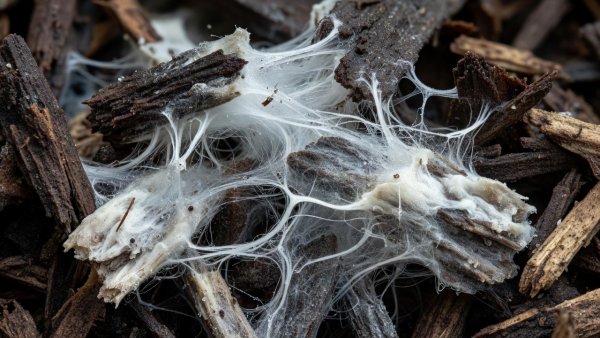
The defining difference between a conventional sunny border and an authentic woodland understory is the fungal-to-bacterial ratio of the soil. Grassland and vegetable soils are typically bacterial-dominant (1:1 to 5:1 bacterial biomass). In contrast, old-growth temperate forest floors operate at fungal-dominant ratios ranging from 100:1 to 1000:1. Without active fungal hyphae, shade perennials struggle with mineral nutrient absorption regardless of how much conventional fertilizer is applied.
The Two Essential Woodland Fungal Classes
1. Ectomycorrhizal & Endomycorrhizal Symbionts
These fungi form direct biological connections with plant roots. Ectomycorrhizae sheath outer root tips of oak, beech, and birch trees, extending vast subterranean networks of microscopic hyphae that explore soil pores hundreds of times smaller than plant roots can penetrate. In exchange for plant sugars created through photosynthesis, the fungi deliver insoluble phosphorus, zinc, copper, and moisture.
2. Saprophytic Wood-Decaying Fungi (White-Rot & Brown-Rot)
Saprophytes are the primary deconstructors of fallen forest wood. While brown-rot fungi break down cellulose and leave behind brittle, blocky lignin, white-rot fungi produce powerful laccase and peroxidase enzymes that break down complex lignin polymers. This enzymatic breakdown converts woody cellulose into humic and fulvic acids, creating the soft, fragrant crumb structure characteristic of rich forest loam.
Building a Functional Nurse Log
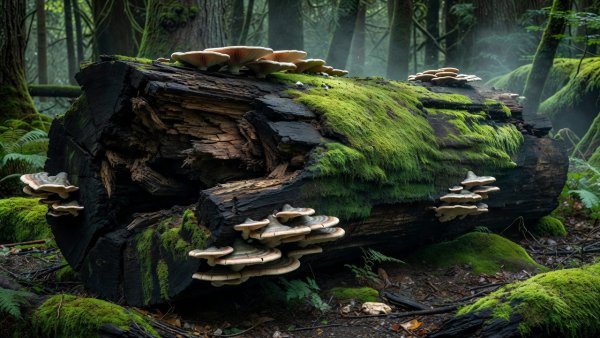
In forest ecology, a nurse log is a fallen tree that provides seedbeds for bryophytes, ferns, and seedlings as it decays. Instead of hauling away storm-damaged limbs or deadwood, homeowners can arrange nurse logs strategically through garden beds:
- Select 6 to 12-inch diameter hardwood logs (Oak, Maple, or Beech; avoid heavily treated lumber or freshly cut rot-resistant Cedar).
- Place the log directly on native soil so the wood can absorb moisture from the earth via capillary action.
- Drill 1-inch notches along the top surface and pack with a 50/50 mix of rich leaf compost and native moss fronds.
- Within two growing seasons, the log will host delicate colonies of Polypodium virginianum (Rock Polypody) and native wood-decaying mushrooms.
Practical Inoculation Protocol with King Stropharia
For homeowners looking to accelerate woodchip decomposition while growing edible gourmet mushrooms, Stropharia rugosoannulata (the Wine Cap or King Stropharia) is an exceptional ally in woodland garden borders:
- Bed Site: Select an area in filtered or dappled shade beneath high deciduous trees.
- Substrate Layer: Spread 2 inches of freshly chipped hardwood chips (chips containing a balance of sapwood and bark).
- Grain or Sawdust Spawn: Scatter 5 pounds of certified Stropharia sawdust spawn across 50 square feet of chips.
- Top Layer: Cover with another 2 inches of chips and water thoroughly.
- Results: Within three months, thick white rhizomorphic mycelium will bind the mulch into a dense weed-suppressing carpet, retaining moisture and producing seasonal mushrooms after soaking autumn rains.